
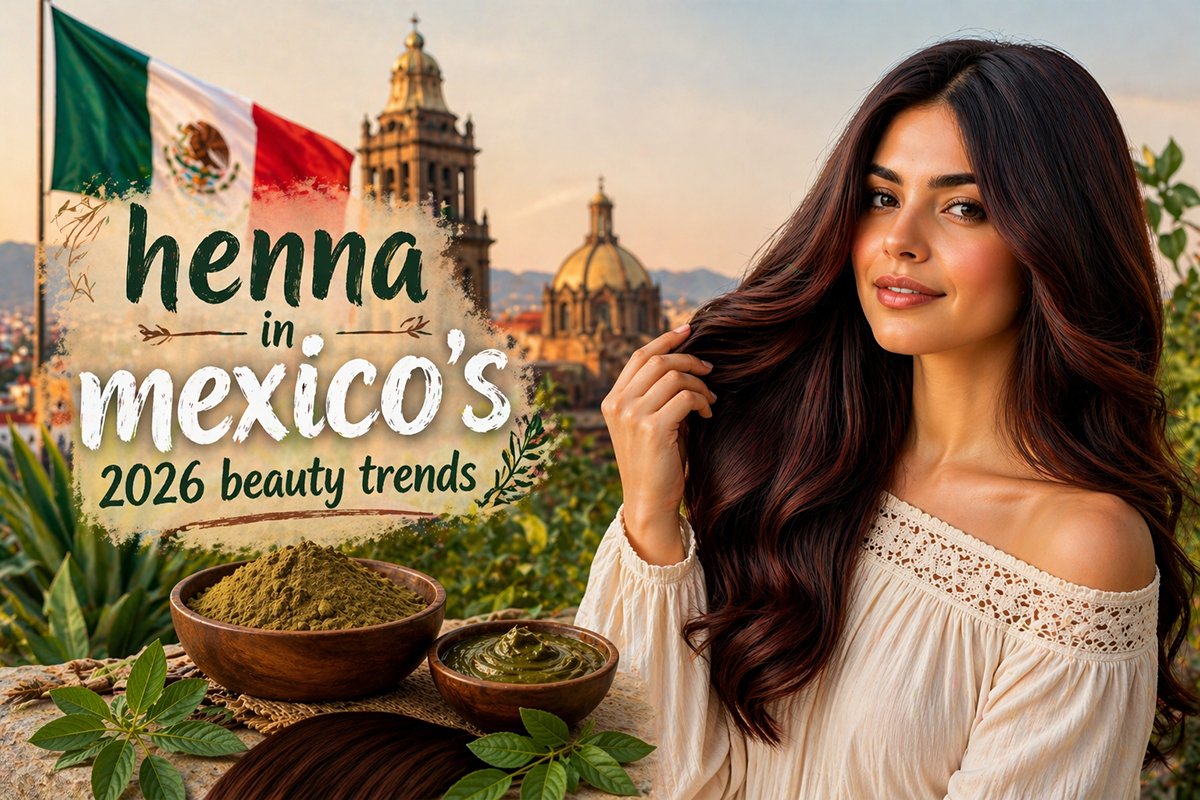
In 2026, something big is happening in Mexico’s beauty scene. More people are tossing out their chemical hair dye and reaching for something older — and safer. Henna is having a major moment. And the hair dye manufacturers leading this shift aren’t just selling a product. They’re changing how Mexicans think about hair color altogether.
Why Mexico Is Turning to Natural Hair Color
Mexico has one of the fastest-growing beauty markets in Latin America. But lately, buyers are asking harder questions. What’s actually in this bottle? Will it cause hair loss? Is it safe to use every month?
Those questions are driving a clear trend. According to recent beauty data, demand for plant-based and chemical-free hair products is rising sharply across Mexico — especially in cities like CDMX, Guadalajara, and Monterrey.
Henna fits that demand perfectly. It’s natural. It conditions. And when sourced properly, it’s free from the harsh chemicals that can trigger thinning hair and scalp reactions.
What Exactly Is Henna Hair Color?
Henna comes from the dried and ground leaves of the Lawsonia inermis plant. The result is a fine green powder that, when mixed with water or lemon juice, releases a reddish-orange dye molecule called lawsone.
Pure henna doesn’t “dye” hair the way chemical colors do. It wraps around each strand and bonds with the keratin protein. The result? Rich, long-lasting hair color — without lifting, bleaching, or damaging the cortex.
Want to learn whether henna leaves are safe in other uses too? Read this guide on henna leaf safety for more context on the plant’s properties.
Quick Fact for Mexico
The Latin American herbal cosmetics market is projected to grow at 6.8% CAGR through 2027. Mexico leads the region in consumer demand for “clean” beauty products — including natural hair treatment options.
The Problem With “Black Henna” — A Warning for Mexican Consumers
Not all henna is created equal. This matters a lot — especially in Mexico, where “black henna” products are widely sold for temporary tattoos and hair darkening.
Many of these products contain PPD (para-phenylenediamine). PPD is a synthetic chemical also found in most conventional hair dye products. It can cause severe skin reactions, blistering, and even permanent scarring. Some users in Mexico have reported reactions after using black henna at beach stalls and markets.
Pure henna is never naturally black. If a product claims to be “black henna,” it almost certainly contains PPD or other synthetic additives. Always check ingredient labels.
Reputable hair dye manufacturers — like Kirpal Export Overseas (KEO) — clearly label their products and publish full ingredient lists. That transparency is exactly what Mexican consumers now expect.
Can Henna Help With Hair Loss and Thinning?
This is one of the most common questions Mexican buyers are searching for right now. And it’s a fair one.
Pure henna doesn’t cause hair loss. In fact, its natural tannins and plant compounds can help strengthen hair at the shaft level. Many users report less breakage after switching from chemical dyes to henna-based colors.
However, henna is not a medical hair treatment for hair loss. If you’re dealing with significant shedding, thinning patches, or baldness, you’ll need a dermatologist’s input alongside any natural product use.
That said, henna works beautifully as a hair treatment for hair growth support — by sealing the cuticle, reducing damage, and improving overall scalp health when used regularly.
Explore how natural ingredients stack up as hair products for hair loss and growth on the KEO resource hub.
The “Orange Roots” Problem — And How to Fix It
Ask any first-time henna user in Mexico and they’ll mention it: the dreaded orange roots. When henna sits on grey hair or very light strands, it can turn them bright copper. That’s not always what you wanted.
Here’s the fix. Many experienced users mix pure henna with indigo powder. Applied in two steps — first henna, then indigo — you can achieve rich browns, deep chestnuts, and even near-black shades. No harsh chemicals needed.
- For a warm brown: mix henna and indigo in a 1:1 ratio
- For a deep brown: use a 1:2 ratio (henna:indigo)
- For covering grey without orange: apply a pure henna base coat first, then follow with indigo
- For a cool black: apply pure henna, wait 2–3 hours, then apply pure indigo
Still unsure which shade suits your skin tone? This guide on 7 best hair colors by skin undertone breaks it down clearly.
How to Cover Grey Hair Without the Root Effect
Grey hair coverage is one of the top reasons Mexican women in their 30s and 40s are switching to henna. But the “root effect” — where new growth stands out sharply — is a real concern.
The solution lies in application technique and formula. Unlike chemical semi permanent hair color, henna fades gradually. This means root regrowth blends more naturally over time. There’s no harsh line.
Tips for seamless grey coverage with henna:
- Apply henna generously at the roots first, then work toward ends
- Keep henna paste on for at least 3–4 hours for grey coverage
- Add a spoon of amla powder to the mix — it deepens the color and reduces orange tones
- Use a conditioning oil (coconut or argan) after washing out to restore softness
- Repeat every 4–6 weeks for consistent, natural-looking coverage
Want to go lighter naturally too? Here’s a guide on how to turn grey hair blonde naturally without bleach.
Is Henna Safe for Cancer Patients and Survivors?
This question comes up often — and it deserves a careful answer.
Pure, plant-based henna (without PPD or metallic salts) is generally considered a safer alternative for people who cannot use chemical dyes. Many oncologists advise patients to avoid PPD-containing hair color products during and after treatment.
However, “safer” doesn’t automatically mean “approved for everyone.” Cancer patients should always check with their oncologist before starting any new hair treatment, including henna. Scalp sensitivity, skin conditions, and medication interactions can all affect how your body responds.
KEO’s herbal hair colors are free from PPD, ammonia, and peroxide — making them worth exploring as an option, under medical guidance. You can review what herbal hair color options look like from a trusted manufacturer’s perspective.
Case Study
Kirpal Export Overseas (KEO) — Building Trust in the Mexican Market
Founded around 2000 by Mr. Sunil Walia and led today with VP Mrs. Payal Walia, Kirpal Export Overseas is one of India’s most established hair dye manufacturers of natural henna and herbal hair colors.
KEO supplies raw henna powder sourced directly from Sojat — the henna capital of India — with ISO, GMP, and HALAL certifications. Their OEM and private-label services allow beauty brands in Mexico to launch their own henna-based product lines without building supply chains from scratch.
Why this matters for Mexico: As local beauty entrepreneurs in cities like CDMX and Guadalajara look to meet rising demand for natural hair products for hair growth and hair loss solutions, KEO offers a ready-made, certified supply path.
The company’s 25+ years of industry experience, farm-to-export traceability, and active packaging solutions make it a strong partner for brands targeting Mexico’s clean beauty wave. Explore KEO’s full product range here.
Henna vs. Semi Permanent Hair Color: What Mexican Consumers Actually Want
Many consumers in Mexico are caught between wanting long-lasting color and avoiding damage. Semi permanent hair color offers a middle ground — but it still usually contains synthetic dyes and developers that affect scalp health over time.
Henna-based color, by contrast, is genuinely deposit-only. It adds color without opening the cuticle. The trade-off is that it’s hard to remove once applied — the dye bonds tightly to keratin. That’s why it’s critical to choose your shade wisely before your first application.
Not sure what to pick? This resource on choosing the right hair color for your skin tone is a helpful starting point.
For a broader look at how hair coloring has evolved from ancient plant dyes to today’s synthetic formulas, Wikipedia’s hair coloring article offers solid context.
Practical Tips for Henna Users in Mexico
- Buy from certified suppliers. Look for ISO, GMP, and HALAL marks on packaging.
- Patch test first. Even pure henna can cause mild reactions in sensitive skin. Test on your inner wrist 24 hours before full application.
- Deep condition after every use. Henna’s astringent properties can leave hair slightly stiff. A rich mask restores softness.
- Don’t mix with metallic dyes. If you’ve recently used a chemical dye containing metallic salts, wait at least 8 weeks before switching to henna.
- Store in a cool, dry place. Henna powder degrades in heat and humidity — both common in Mexico’s climate. Sealed, airtight packaging is key.
FAQs
Q: Does henna cause hair loss or damage?
Ans. No. Pure henna strengthens hair by coating the strand and sealing the cuticle. It does not penetrate the cortex like bleach or chemical dye. Users often see less breakage, not more. However, applying henna too often without conditioning can make hair feel dry and brittle over time.
Q: How do I cover grey hair without a root effect?
Ans. Apply henna to roots first and leave it on for at least 3–4 hours. Mix amla into the paste to reduce orange tones. Because henna fades gradually, regrowth blends more naturally than with chemical semi permanent hair color — making root lines much less noticeable.
Q: Is henna safe for cancer patients?
Ans. Pure, PPD-free henna is generally considered safer than chemical hair dye for sensitive individuals, including cancer patients and survivors. But it’s not universally approved. Always consult your oncologist before using any hair treatment during or after cancer care.
Q: Why does my henna turn orange on grey hair?
Ans. Grey hair has no existing pigment to mix with the henna dye — so the result skews orange. Fix this by following your henna application with a pure indigo coat, or by adding amla or brahmi powder to your henna paste before applying.
Q: Where can I find trusted hair dye manufacturers of henna products in Mexico?
Ans. Look for Indian exporters with ISO/GMP/HALAL certification who offer private-label or OEM services. Kirpal Export Overseas (KEO) is one of the most established suppliers in this space, with direct access to Sojat henna farms and export-ready packaging suited to the Mexican market.